2/01/2015

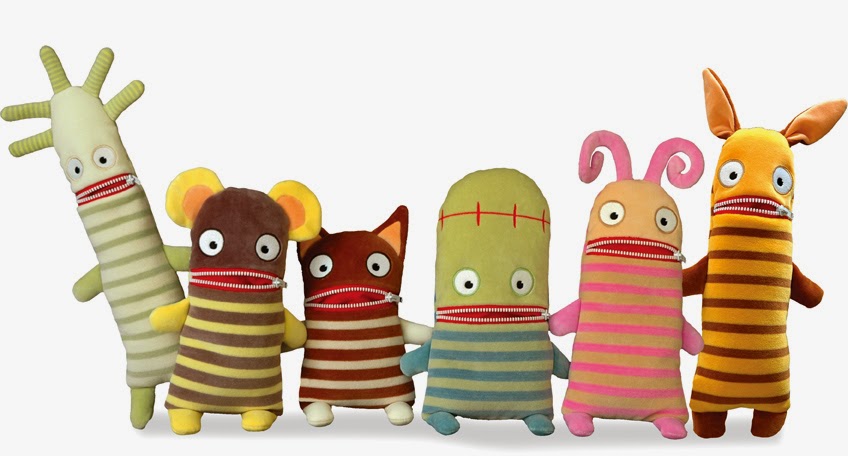
Sorgenfresser: The Worry-Eating Plush Toys.....
Swollow Your Fears!


Developmental Stress

Child Life is a field that gives recognition to “developmental stress” – or the wide variety of difficult and potentially traumatic experiences that specifically children encounter throughout development. From a developmental perspective, stressors have the potential to overwhelm a child’s natural ability to cope effectively.

As professionals working with children or as parents/caregivers, it is simply important to recognize that all children have worries and regardless of how big or small they are, they are very REAL to a child. Oftentimes love one do their best to try and help, but if they are not aware of what the problem is, it becomes very difficult to help. This is where these cute and clever worry-eating plush toys can be an invaluable reasource to professionals/parents.

[!] TA-DA! Introducing …


Sorgenfresser!


The Sorgenfresser’s motto is "we eat your worries", and sometimes with just a bit of help, this is exactly what they do! The idea behind the Sorgenfresser is simply that they “eat” worries – from nightmares to hospital stays or the first day of school.

Sorgenfresser: Worry-Eaters
The child writes or draws the worry and then feeds them to into the zip mouth of the worry eater plush. Of course, this does not solve the problem straight away but can be very symbolically therapeutic for a child – creating an opportunity to define what the worry is and having a way to alleviate the worry. It certainly is a first step in the right direction of healthy coping and can provide a child with an immediate feeling of immense relief.


"Eating" Up Worries!
The next step could involve a parent (or professional). With the problem in the mouth of the worry eater, a parent then is able to uncover exactly what worries their child has. This too becomes a great opportunity to sit down and gently discuss the problem and talk about ways to cope healthy. Also, the simple idea that once the Sorgenfresser is placed in a child’s room, it will keep an eye out for bad dreams and worries and gobble them up, can be a comforting feeling to a child and reassure him or her at bedtime.  


[!] NOTES for Parents/Professionals


Sorgenfresser are based on Gerhard Hahn’s German TV series and in plush form, all have their own unique look and personalities. Some are stretched out, some have floppy ears and some toothy grins. They come in very fun colours and are made with soft velour that is machine washable at 30°. Although, Sorgenfresser is difficult to find in retailers across Canada, they are easily purchased online. Sorgenfresser won Silver for Best Soft Toy in the Loved By Parents awards 2013 and Gold for Best Soft Toy in the Independent Toy Awards 2013.


Thanks for taking the time to read!


<3
*.... Plus they are cuddly.... Bonus points!


References:
Facebook Page

Image Sources:


3/15/2014

The Five S’s – Easing a Baby’s Pain After Vaccination


The Calming Reflex

Working with new parents, I have found that one of the first realities they encounter is realizing that their new little one is not yet fully “ready” for the world at birth! During the first few months, babies fuss an average of 1.5 hours a day and 10% cry more than 3 hours a day (i.e., the medical definition of colic). YIKES! That is a lot of crying (and that does not include a parent’s crying)!

In a sense, babies are “evicted” from the womb after 9 months – if they remained any longer their heads would continue to grow to a size which makes delivery dangerous for them and their mothers.
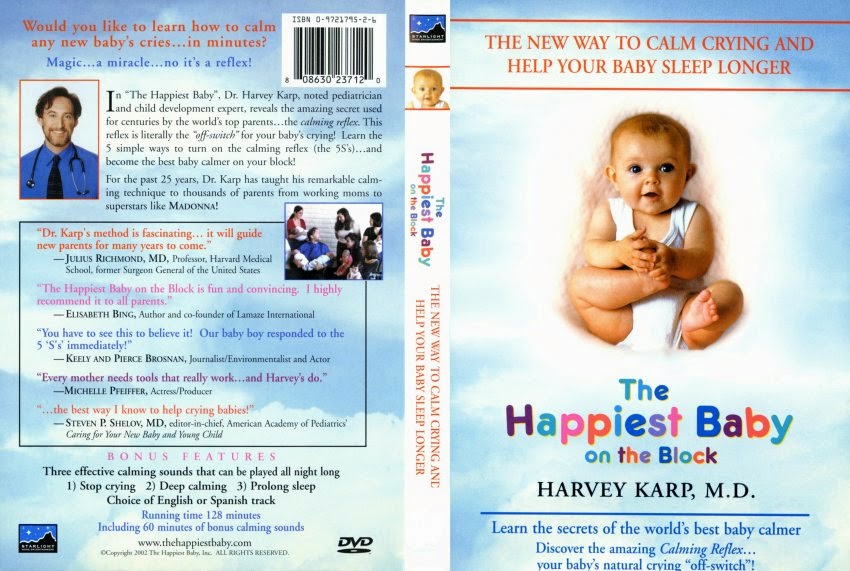
Dr. Harvey Karp says the best way to calm a newborn is by re-creating the noises, movement, and the snug environment of the womb. Dr. Karp's critically acclaimed books and DVDs, “The Happiest Baby on the Block” and “The Happiest Toddler on the Block,” have made him one of the most-read paediatrician in north America. In his books, he explains that in the womb babies are constantly rocked, insulated by the warm and soft uterus walls and are soothed by the whooshing sound of blood flowing through the placenta - a sound about twice as loud as my vacuum cleaner! This explains why newborns have so much trouble adjusting after they are born. It is not that the world after birth is over-stimulating to them but rather that it is profoundly under-stimulating – it is no wonder why babies fall asleep when we take them to noisy basketball games or wedding receptions! The complete quiet and stillness oftentimes does more to disrupt their sleep than it does induce it.

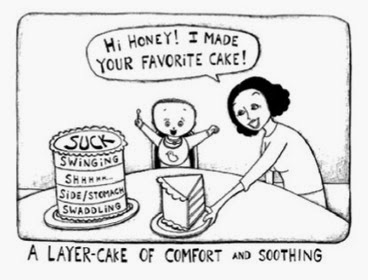
This is where the “calming reflex” has immediate relevancy. In Dr. Karp’s best selling book, “The Happiest Baby on the Block,” he outlines the “Five S’s” to calming a crying baby with the aims of helping parents and those working with children better effectively sooth infants and boost restful sleep.


The Five S’s To Calming a Crying Baby (Dr. Karp – The Happiest Baby Method)

#1: Swaddle

[?] What is it?

To wrap a crying or fussy baby snugly, arms at his sides, inside in a thin blanket (to avoid overheating).

*NOTE: Always lay a baby down to sleep on his back – never on his side or tummy. 

[!] Why it works! Swaddling soothes babies by providing the secure feeling they enjoyed in the womb.


#2: Side or Stomach Position

[?] What is it?

Now that the baby has been swaddled, you can begin to calm him (if crying and fussing) by putting him on his side or stomach. Hold the baby in your arms in a side or tummy-down position, on your lap or over your shoulders.

*NOTE: Use this “S” only for soothing – never* put an infant on his side or stomach when he is sleeping. Once he falls asleep, lay him on his back.

[!] Why it works!

To reduce the risk of SIDS, it is recommended to put babies to SLEEP on their BACKS but, because newborns feel more secure and content on their side or tummy, these are great positions for SOOTHING (not sleeping).


#3: Shushing

[?] What is it?

The "shush" step is achieved by loudly saying "shhh" into your swaddled baby's ear as you hold him on his side or tummy. Put your lips right next to the baby's ear and "shhh" loudly (usually while gently jiggling him – see "S" #4). Shush as loudly as your baby is crying. As he calms down, lower the volume of your shushing to match.

[!] Why it works!

Having spent months in utero, where blood flow makes a shushing sound, newborns are able to calm down and sleep better in noisy environments. However, remember that not all noises are alike.


#4: Swinging

[?] What is it?

While shushing the swaddled baby in a side or stomach position, “jiggle” the baby using very small rapid movements. Be sure to support the newborns head and gentle jiggle (not shake) him.

[!] Why it works!

In utero, babies were often rocked and jiggled – in motion. This makes jigging familiar and comforting to a newborn.


#5: Sucking

[?] What is it?

This simply means giving a swaddled newborn a pacifier/soother if he is upset. This step tends to be more a personal decision for many parents, respectfully so. In combination with being held on the baby’s side or tummy, being soothed with a loud shushing, and being gently jiggled, sucking may help to calm.

[!] Why it works?

Some babies instinctually “suck” on their thumb or pacifier and find comfort in it.


[CHILD LIFE]and the Five S’s: Applications to Newborn Injections/Vaccinations

Over the years, the standards for helping to reduce pain stemming from vaccinations or blood draws ect. has evolved. In the past, doctors recommended giving infants baby Tylenol or Advil to prevent possible fever from developing post vaccination and also to aid in pain relief. That, however, has changed in recent years as research indicated that giving acetaminophen (the main ingredient in Tylenol) before or after a vaccination made the vaccine less effective because fewer antibodies were consequently being produced.
Today, Dr. Harvey Karp’s Five S’s are being used as a highly effective non pharmacological alternative to pain-relief after infant vaccinations or blood work. His method was investigated in clinical trials where results found the majority of infants had stopped crying by a measured 45 second interval…. and, by the minute mark, none of babies who received the 5 S’s/physical intervention were yet crying. This study was published in the journal of Paediatrics and paved the way for the 5 S’s to be a NEW standard of pain relief in hospitals post infants injections or blood work.

As a Child Life Specialist, having implemented the 5 S’s in practice, I have not only witnessed the soothing potential of these 5 easy steps in triggering a newborn’s calming reflex during what can be very painful procedures but I receive the added satisfaction of knowing I have helped to empower parents who oftentimes feel very helpless in these healthcare scenarios –that is, arming them a with a highly effective non-pharmacological way to sooth and calm their infants and provide pain relief.

*TIPS for Use in Hospitals:

  • Dr. Karp recommends swaddling the baby prior to the procedure, leaving the legs exposed (this is the spot where injections in young babies are likely made). This will help to trigger the calming reflex before the procedure.

  • It is also recommended to have a white noise CD on before the injection happens (or any type of ‘swooshing’ sound).


Thanks so much for taking the time to read!

<3.


Happy Baby, Happy Child Life Specialist… “


References:

The Happiest Baby on the Block (2003) – Book by Dr. Harvey Karp.
Easing Baby's Pain After Vaccination


Image Sources:
Book cover
DVD cover
How to swaddle
5 S's comic


1/12/2014

 
The Superformula!
Chemotherapy Re-Branded to Help Children with Cancer


Child Life, in practice, is incredibly inventive and capitalizes on …. ingenuity, resourcefulness and imagination. This is one of the reasons, I was drawn the field… being a forever creative kinda girl! Some of the most effective Child Life strategies involve imaginative ways to alter a child’s perspective of a challenging or difficult situation. I am truly an advocate for the idea that suggests … the first step in the battle of illness is believing in the cure…. OR in other words, having hope.


This.. needs to be shared….

Superheroes are helping children fight against one of the real world’s greatest villains – cancer. How?!


SUPER Intravenous (IV) Bag Capsules

A worldwide advertising agency, JWT has teamed up with doctors at A.C. Camargo Cancer Center in Sao Paulo, Brazil to design Intravenous (IV) bag capsules based on the uniforms/logos of patients’ favourite Justice League superheroes – Batman, Superman, the Green Lantern and Wonder Woman are just a few examples. JWT’s client, Warner Brothers - the owner of DC Comics, have allowed the hospital to put its characters to the best use possible!


SUPERFORMULA: IV Capsules

Essentially the concept was to create a case that clips together to completely cover the chemotherapy intravenous bag. The creativity behind this case cover comes from combining the chemotherapy medication with the fantasy world of superheroes and is given the name, “Superformula.” Child Life is written all over this idea! The new name and look of the chemotherapy treatment IV bags helps to change the perception children by suggesting that the “Superformula” gives them their own superpower which could be used to conquer their illness.

They may appear as simply covers for IV bags, but they are an awe-inspiring way to help children deal with cancer.

The inspiration for this idea came from recent research investigating the “humanization of cancer treatment” specific to pediatrics and how according more positive meanings to treatment is beneficial to recovery and cure.


Hall of Justice and Comic Books!

"Hall of Justice"
As part of this super (pun intended) initiative, the hospital’s playroom was transformed into the ‘Hall of Justice’ with an exclusive entrance accessible to only the little heroes battling cancer. The ad agency also worked with Warner Brothers to produce a series of comic books and animations in which these superheroes underwent experiences that were similar to the experiences of children with cancer. These superheroes recover their strength because of a “Superformula” developed by a team of expert doctors.


“It’s very important to tell the kids the story through analogies that they will easily understand but to never lie to them. Therefore, a Superhero does not develop the super formula, nor does it come from another planet, specialists develop it,” stated a JWT Project Manger (see source here).

 In the comics, villains spray invisible gas that make the superheroes sick. The superhero then employs his/her “superfriends” or doctors, healthcare staff, friends and family members, which all help in recovery and cure. These stories explain illness and the treatment process in developmentally appropriate, child-friendly and fun ways.


[!] Hopes

“The treatment, especially in the beginning, is very frightening for both children and family members. The Superformula project helps to understand the disease and gives children and adolescents more strength to face the pain and overcome the problems associated with the long treatment in order to, at the end of it, get well.”
                - Cecilia Lima da Costa, Director (see source here).

This effort is so inspiring and capable of positive changes in the way children view cancer treatment and their own “SUPERPOWERS” as we all recognize that they are the REAL superheroes.


Thanks for taking the time to read!
 
 
<3


SUPER Deluxe Duper liking this idea!

References:

JWT’s Blog

Images Source:

Picture 1 and 6
Picture 2, 3, 4, 5

12/11/2013

“Belly Breathing” – Diaphragmatic Breathing


As a Child Life Specialist, I have seen the benefits in teaching what is (cutely) termed, “Belly Breathing” as a self-calming technique that functions to lower stress and anxieties levels and promote relaxation as well as decrease physical pain and anger in children and adolescences.


The breath is a vital ‘tool’ that makes all the difference in the way we move, think, recover, heal, and interact with others because it is linked to our physical, emotional and mental states. From a Child Life perspective, as a tool, breathing can be used for anxiety/stress management when working with children of all ages and abilities and …. is one tool we have with us at all times (that’s right - we can leave the preparation and distraction kits on the shelves!).
 
“Take a deep breath” is wonderful and simple wisdom, but it can be difficult when a child is feeling a little challenged. Also, while we all know how to breathe, in order to be truly beneficial, breathing must be diaphragmatic – that is just the physiological (fancy) word for “from the belly.” In my experience, these two reasons are why it is important to practice or rehearse implementing breathing as a tool for emotional management and coping when working with children with the ultimate goal being… self-regulation!
 
 
[?] What is Diaphragmatic Breathing?
 
Diaphragmatic breathing is also known as “belly breathing,” deep breathing, or abdominal breathing and is used as a technique to slow down breathing when you are feeling anxious or stressed.
 
Unlike shallow breathing, which only involves flexing the rib cage, in diaphragmatic breathing you attempt to breathe deeply by flexing the diaphragm. In this way, you ingest more oxygen, which will have the affect of reducing hyperventilating and gradually, calm the body’s anxious/stress response – panic attacks, meltdowns, or other extreme reactions.
 
 
[?] Why is Belly Breathing so Important?
 
In a anxiety, stress or fear responses, the body’s respiration accelerates – we tend to take short, quick, shallow breaths, or even hyperventilate; sometimes called, “overbreathing.” This type of breathing can actually make you feel even more anxious due to increased heart rate, dizziness, headaches ect. Therefore, shallow breaths are physiological unhelpful – they do nothing to allow us to physically calm down.
 
From a sensory perspective, belly breathing can help develop a sense of proprioception, or outer body awareness and interoception or inner body awareness. Becoming body-aware allows us the power to control our anxious/stress response which is key to self-regulation. Belly breathing also balances the nervous system affecting the entire body and help to eliminate waste, strengthen the immune system and increase the supply of oxygen and nutrients to cells throughout the body. It can also aid in relaxation, relieve muscular tension, increase flexibility and joint strength and help us to recover quicker from stress or exertion.


HOW TO Teach Belly Breathing to Children!
 
Diaphragmatic breathing does require practice and most certainly when you are teaching it to a child as calming tool when faced with any anxiety-provoking situation. The child does not need to be feeling anxious to practice. In fact, at first you should practice while the child is feeling relatively calm – the child needs to be comfortable breathing this way when feeling calm, before he/she can feel comfortable doing it when anxious. This will help the child to understand and ingrain the exercises in his/her mind, preparing for the time when he/she does have an anxious response.
 
It is best to begin this exercise by laying down and then as the child progresses and becomes comfortable, he or she can use this exercise in a chair or while standing. [CHILD LIFE TIP:] Have the child lay on a “claming carpet, introduced as a special carpet that helps us to relax and breathe slowly and smoothly…. or a faux grass turf, prompting the child to envision an outdoor scene … with blue skies and puffy clouds above…. or imagine that there is a balloon in their bellies which they attempt to inflate with each breathe ect.
 
 
  1. Positioning: Have the child rest on his/her back with hands placed on the tummy.
  2. First Deep Breathe: Have the child take a deep breath in through the nose, slowly and gently. Then, release the breathe through the mouth while saying “ahhhhh.” The child should be able to feel his/her tummy rise and fall.
  3. Begin: Next, have the child breathe slowly in through the nose, out through the mouth. Have the child imagine trying to i.e., pick a flower (in the case of a scenario involving the faux grass turf rug) and blow the petals off one by one or… imagine trying to blow a feather up in the air or…. imagine inflate the balloon in their belly .. ect.
  4. Finding a Pace: Have the child inhale slowly and count 2, 3, 4 and exhale counting 2, 3, 4. 5.
  5. Repeat: Repeat. Inhale 2, 3, 4. Exhale 2, 3, 4. About 6-8 breathing cycles per minute is often helpful to decrease anxiety, but it is important for the child to find their own comfortable breathing rhythm.
 
 
CHILD LIFE TIPS!

* If the child has trouble with breathing deeply enough at first, try having him/her balance a stuffed animal on the tummy and try to move it just by breathing. This should help grasp the feeling of how to breathe down deeply into the diaphragm – which can be a hard concept to explain to little ones
* Bigger and stronger breaths will increase energy whereas smaller and lighter breaths will clam. As air is filtered into the body, it will also stimulate the appropriate receptors in the nasal cavity for energy or focus or calm.
* Breathing should be rhythmic and taken a few breaths at a time to avoid dizziness or overbreathing. * Keep some tissues handy! Hehehehe :o).


BEDTIME Belly Breathing
 
There are SO MANY breathing games that can be used to encourage breathing but, I will share a resource that specifically teaches diaphragmatic breathing to children in a cute little short story format that can be read at bedtime, which tends to be difficult for children experiencing unusual anxiety/stress. The book is titled, "Sea Otter Cove" and is written by Lori Lite.
 
I like the simplicity of the story (I also, admittedly might be biased to the fact that one of the characters is a mermaid). The author does a great job of developing the characters – a playful sea otter and a enchanted sea child. Built into the storyline are prompts to encourage the child to slow down their breaths, relax and fall asleep peacefully.
 
This book can be found in major bookstores and is available for download on iBooks and iTunes @ https://itunes.apple.com/us/book/sea-otter-cove/id420318127?mt=11&ign-mpt=uo%3D4


Thanks so much for taking the time to read!

<3.


*Yoga breath* 2, 3, 4 exhale….


References:


Images Sources
Anxiety Girl
Keep Clam and Belly Breath
Breathing Balloon
Breathing and Counting
Sea Otter Cove Book Pictures 


11/24/2013

“Take a Chill” – Smartphone App for Teens


Smart technology” has come to serve as a valuable resource to the Child Life community when working with children and families in health care and related settings in accordance to best practice guidelines.

Today, teens and smartphones (in some of the most glitter-ific cool cases I’ve ever seen) seem to go hand in hand – literally! While many caution the use of smartphones, citing them as “addictive,” they also can be very useful to the adolescent population when you consider the therapeutic value of certain* apps like – Take a Chill. Take a Chill is full of tools to help reduce adolescent stress and the physical and psychosocial problems that could result.

Take a Chill is described as a Mindfulness-Based Stress Reduction tool for Teens (MBSR-T). It is full of short mindfulness exercises, reflective activities and affirmation phrases that help adolescence manage stress, and bring mindfulness practices into their daily routines, whether it is studying for a test or preventing and overcoming negative thought patterns that can develop.


This application features:

  • Short Exercises: Illustrated activities for relief in “in-the-moment” situations. 

  • Daily Dose: Daily activities to help reinforce concepts and increase mindfulness practice.

  • Audio: Music to accompany exercises.

  • Progress Tracker: The ability to see your progress overtime.

  • Reminders: To keep motivated.


    Stress Assessment: Quick self-assessment to gauge stress levels.

  • Notes: A notepad to jot any thoughts or insights that come to mind.

  • Motivational Quotes: Motivational quote appear after each use.


[?] What is MINDFULNESS?

Mindfulness is about grounding consciousness in the present. Mindfulness is a way of learning to relate directly to whatever is happening in your present life. It is described as a way of “taking charge of your life” or making a conscious effort to cope with personal stress, pain, illness or other challenges and demands of everyday life.

In contrast, we have probably all experienced moments of “mindlessness” or a loss of awareness resulting in forgetfulness or the inability to remember experiences; feeling separate from one’s own self; or a sense of living mechanically – all of which can greatly diminish a sense of well-being.

Restoring a sense of well-being requires increased awareness or mindfulness. An increased awareness of our own thinking, feeling and experiences allows us to cultivate a sense of control because we can choose to consciously respond or react in more productive ways rather than on the basis of habit. Mindfulness-based stress reduction (MBSR) is intended to ignite this inner capacity and infuse your own life with awareness.

Mindfulness or MBSR have proven to be reliably effective in reducing symptoms of anxiety and depression (Ramel, Goldin, Carmona, & McQuaid, 2004; Segal, Williams, & Teasdale, 2002) and increasing self-regulated behaviour and positive emotional states (Brown & Ryan, 2003).


[!] Mindfulness in ADOLESCENCE

Adolescence often have difficulty with developing social skills, emotional regulation, confidence, multi-tasking, impulsivity and attention.

Learning Mindfulness Can:

  • Bring adolescence into the present moment through a reduction of focus on the past or future and more attention on the here and now. Being present may add clarity and vividness to experience and bring about quality or optimal moment-to-moment experiences.

  • Reduce - thought-fixation, “distorted” thinking, worries and negative self-talk or other experiences/experiences that can diminish a sense of well-being.

  • Increase - empathy, patience, “letting-go” and kindness toward self and others.

  • Bring Focus to - self-regulation (attention, thoughts and emotions). An increased awareness of our own thinking and feeling, allows us to consciously respond or react in more productive ways rather than on the basis of habit.


What I like about “Take a Chill” – A CHILD LIFE PERSPECTIVE

As a Child Life Specialist, I advocate for developmentally appropriate practice or altering approaches to anxiety-reduction and coping to the development (also, the physical, emotional states) of the child or adolescent that I am working with. What I like most about Take a Chill is that it seems to have applied the principles of mindfulness-based stress reduction (MBSR) to suit the adolescent population specifically. For example, it accommodates for attention span with shorter in duration exercises and activities. Also, Take a Chill seems to aims to ‘meet’ adolescence where they are developmentally and use language, references and stories that are relevant to their social world. It is very user-friendly and……. Fun!

** Take a Chill is available through the itunes store currently for $1.99 (USD) at https://itunes.apple.com/us/app/take-a-chill-stressed-teens/id496802813.

** If you would like more information about Take a Chill, please visit http://www.stressedteens.com.


Thanks so much for reading!

<3.


Okay – I admit it, my smartphone is very sparkly!


“Pain is inevitable in life; stress is optional.”
 - Stressedteens.com


Image Source
Take a Chill Logos
All Take a Chill Screenshots

11/18/2013

Biodots - Kid-Friendly Stress and Tension Monitors

Biofeedback

As a Child Life Specialist, I am familiar with biofeedback as a therapy or a way to gain “feedback” from your body in response to stress and learn how to actively induce a more relaxed state. There are a variety of biofeedback devices that function to monitor the various involuntary systems in the body (i.e., heart rate, breathing, blood pressure, skin temperature, muscle tension ect.), and because information from these devices are ‘fed back’ immediately, you can measure how tense your body is and importantly, learn how to lower your stress response in that instance.

[?] How is information from our bodies useful?

Oftentimes, we are unaware of how stress affects our physiology. However, once someone becomes aware of how stress affects their body and what stress “feels” like, they can actively implement simple techniques to positive affect their body systems…. or combat the effects of stress to help restore the body systems to a state of relaxation. The ultimate goal of biofeedback being, to learn how to control physical responses that are normally automatic.


Biodots

As a Child Life Specialist, I use Biodots as a more kid-friendly alternative to what can be very costly and complex biofeedback device. These little dots are not only fun to use but are a super effective visual tool to help children (a) become aware of experiences that cause them to become stressed (b) learn about their own stress response (c) keep track of their stress levels and, (d)* learn what relaxation techniques are most effective in lower their stress responses.


Biodots are small self-adhesive, temperature sensitive discs that are intended to be placed on the skin to monitor changes in temperature. The ideal placement is on the back of the hand, in the little spot between the thumb and index finger. Biodots change in colour to reflect changes in skin temperature to alert a child (in this example) to when his or her body is reacting to stress or is in a state of relaxation. They remind me of the ever so popular…. Mood ring! True to a mood ring, they also come with a colour interpretation chart which is used to relate the colour of the Biodot to the body’s level of relaxation or tension.


**Child Life Ideas for Use:


[NOTE:] This is one suggested example of how I was able to use Biodots successfully. Please alter in accordance to your assessment of the child or teen you are working with.

  1. Introduce the Biodot as a way to learn about “what’s going on inside your body,” and explain how it works.
  2. Ask the child to “track” colour changes in a journal for a few days - Keep a log entry of (a) colour of the dot (b) what they were doing/what was happening during that time and, (c) reflect on how they were feeling. (TIP: I find it useful to allow the child to personalize the journal, attach a colour interpretation chart, and help them fill out their first entry.)
  3. Evaluate the journal logs, noting times of stress and relaxation - Focus on times of relaxation, discussing what activities they were engaged in. Continue this conversation to a discussion of NEW* ways to help your body relax (i.e., deep breathing, thought stopping, meditation, listening to music ect.). (TIP: I always enjoy creating a visual tool or chart listing their most effective relaxation strategies which they can decorate and attach to their journal.)
  4. Ask the child to continue to keep logs of color changes but NOW, implement a relaxation technique each time their Biodot colour signifies that they are stressed. Direct them to observe the colour change in the dot after the use of a relaxation technique.
Keeping a log of colour changes observed in the Biodot allows children to gain a deeper understand of their body’s response to stress and the benefits of active relaxation as they become conscious of the physiological sensations that are happening as they feel stressed or tense. This also aids in enhancing body and mind awareness and the idea that we can learn to control our physical response to stress to bring about a more relaxed body state.

For more information or to purchase Biodots, please visit: http://www.stressstop.com/microsites/freebiodots.com where you can receive 25 biodots for free (with no shipping cost to U.S. customers).


<3.


Thanks for reading!


Forever aiming for a Purple Biodot kinda mood!

References:

Images
Biodot Upclose
Biodot Chart
Biology in a Box Graphic: Copyright © 2013 childsplayccls. (This is an original image, please clearly reference image to http://childsplayccls.blogspot.ca if you would like to use it.)

11/11/2013

Barbie’s New Friend.


Admittedly, I am a Barbie girl (with more than plastic in my little head – thank you kindly!). Still giving recognition to the fact that each child will play differently with whatever toy holds their attention, I love the notion of dolls for children which become their comfort toy, best buddy, little version of themselves, make-over BFF ect. As a Child Life Specialist, we use personalized hospital dolls (soft cloth dolls) for a variety of purposes – to establish a rapport with a child, to engage in a process-oriented activity (distraction, relaxation), to gain valuable assessment information, for dramatic play, and to teach or prepare a child for situations they will encounter. Beyond that, “baby dolls” encourage nurturing play and can inspire pretend play memories that children will cherish – as an adult, I know this to be true (kudos to Susie – my childhood doll). As children get older, dolls begin to symbolize an identity they want to aspire to or an identity that is like to their own. Children often look to identify with something or someone. This can become SO important for children facing illness who already away from normal routines of school and friendships, peer-group activities and who often spend periods of time alone in healthcare environments.

Up until recently, there has been very few and limited (hard to acquire) dolls that are “alternatively” designed to better reflect children with medical or special needs.

TA-DA! It’s here! Mattel, the maker of Barbie has now produced a bald fashion doll for children who have lost their hair because of illness or cancer.
Ella - The bald Barbie

Her name is Ella and she is Barbie’s new friend! Ella is bald (her hair is detachable – it’s a wig, and also interchangeable with other hair pieces). The doll comes with variety of frills such as hats, scarves and cute accessories like a handbag and a headband to allow children a traditional fashion play experience.


“These dolls will be distributed exclusively to children’s hospitals and other hospitals treating children with cancer throughout the U.S. and Canada, directly reaching girls who are most affected by hair loss."
         - Mattel Company spokesman, Alan Hilowitz.


Yes, Canada! Although I have no yet gotten a hold of one, it is so great to know they are out there and available to the right child.


Background HISTORY:
Beautiful and Bald Barbie Facebook Movement

For those unaware, the doll came about as a result of a Facebook movement “Beautiful and Bald Barbie – Let’s see if we can get it made” which begun nearly two years ago, with the goal of appealing to Mattel to produce a bald version of Barbie.
 
Despite the Facebook page generating an overwhelming amount of support and “likes,” it was not successful in convincing Mattel to mass produce and sell a bald version of Barbie. However, Ella will be distributed directly to children through their relationships with the Children’s Hospital Association, CureSearch and the National Alopecia Areata Foundation.

BRATZ Dolls

True Hope Moxie Girlz
While Mattel resisted the idea of a bald Barbie, it should be commendably noted that MGA Entertainment and producer of the controversial, Bratz Dolls, stepped up to the challenge and created the “True Hope” line of bald Bratz and Moxie Girlz dolls.

True Hope Childhood Cancer Awareness Poster
Even more, for every ”True Hope” doll sold, MGA is donating $1 to City of Hope, which is a leading research, treatment and education center for cancer, diabetes and other life-threatening diseases. How wonderful!


Regardless..….

These both these dolls are truly amazing. Not only will they serve as inspiration and fun to children facing health challenges, they will also serve to raise awareness for children with cancer, others who have lost their hair due to illness (i.e., alopecia and trichotillomania) and to anyone who sees them in a poster or on a toy shelf.


[?] How do you feel about Mattel’s decision to limit distribution and make "Ella" unavailable to the commercial market?

[?] The Bratz Dolls have long been considered “inappropriate,” for children by many. However, does the fact that MGA Entertainment were the first to acknowledge the need for alternative dolls and manufacture a bald doll, change your opinion about the Bratz and Moxie Dolls?


<3.

Thank you so much for reading!


Forever Dolled Up!

References:
*For additional information about Ella, please see CBC News @ Bald Barbie Doll

Image Source:
Ella in a box
Beautiful and Bald Barbie (page no longer available*)
True Hope Bratz Doll in a box
True Hope Bratz Poster